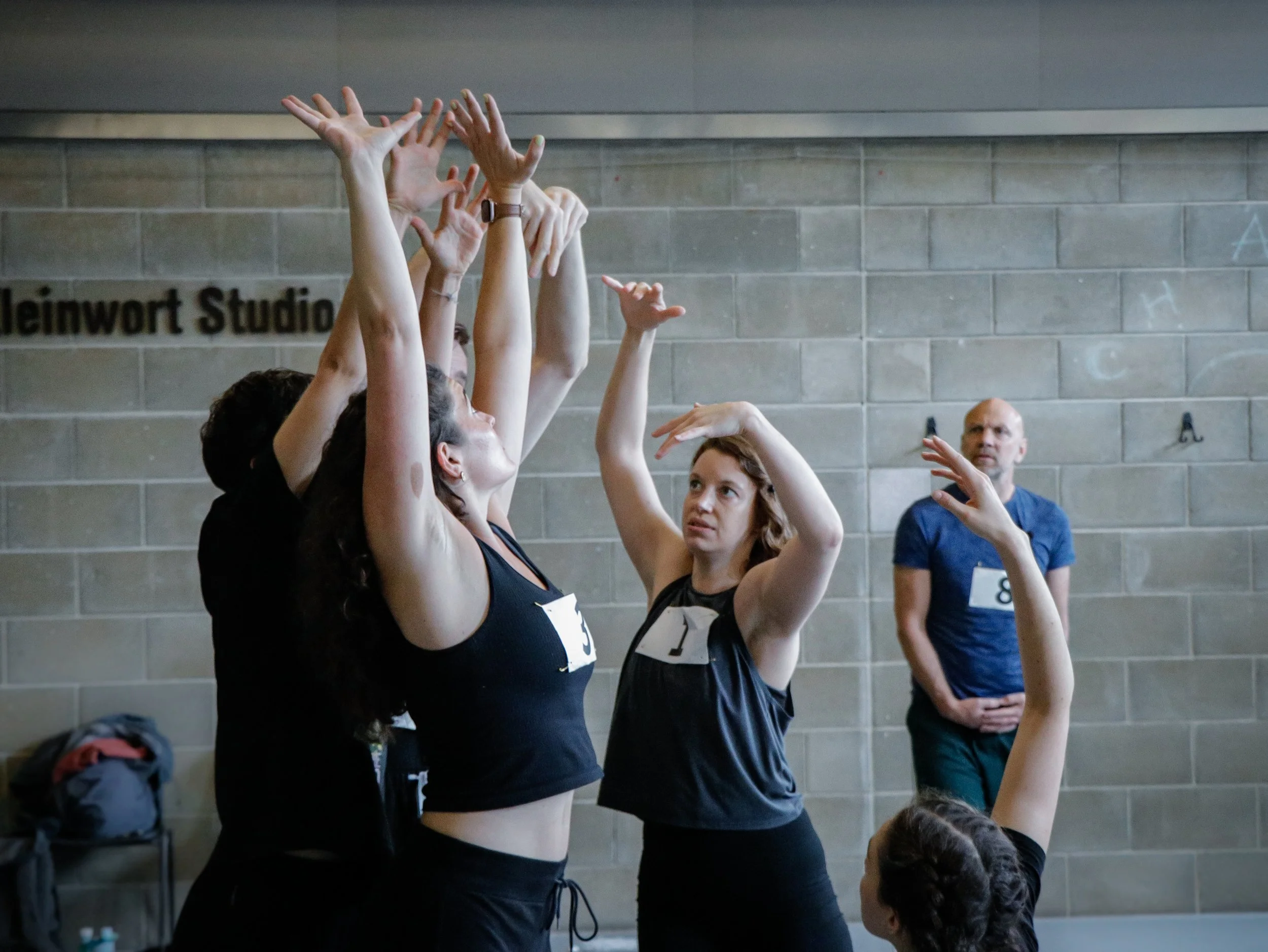
Theatre Biometrics
Rediscovering Creativity & Wellbeing in Physical Communities
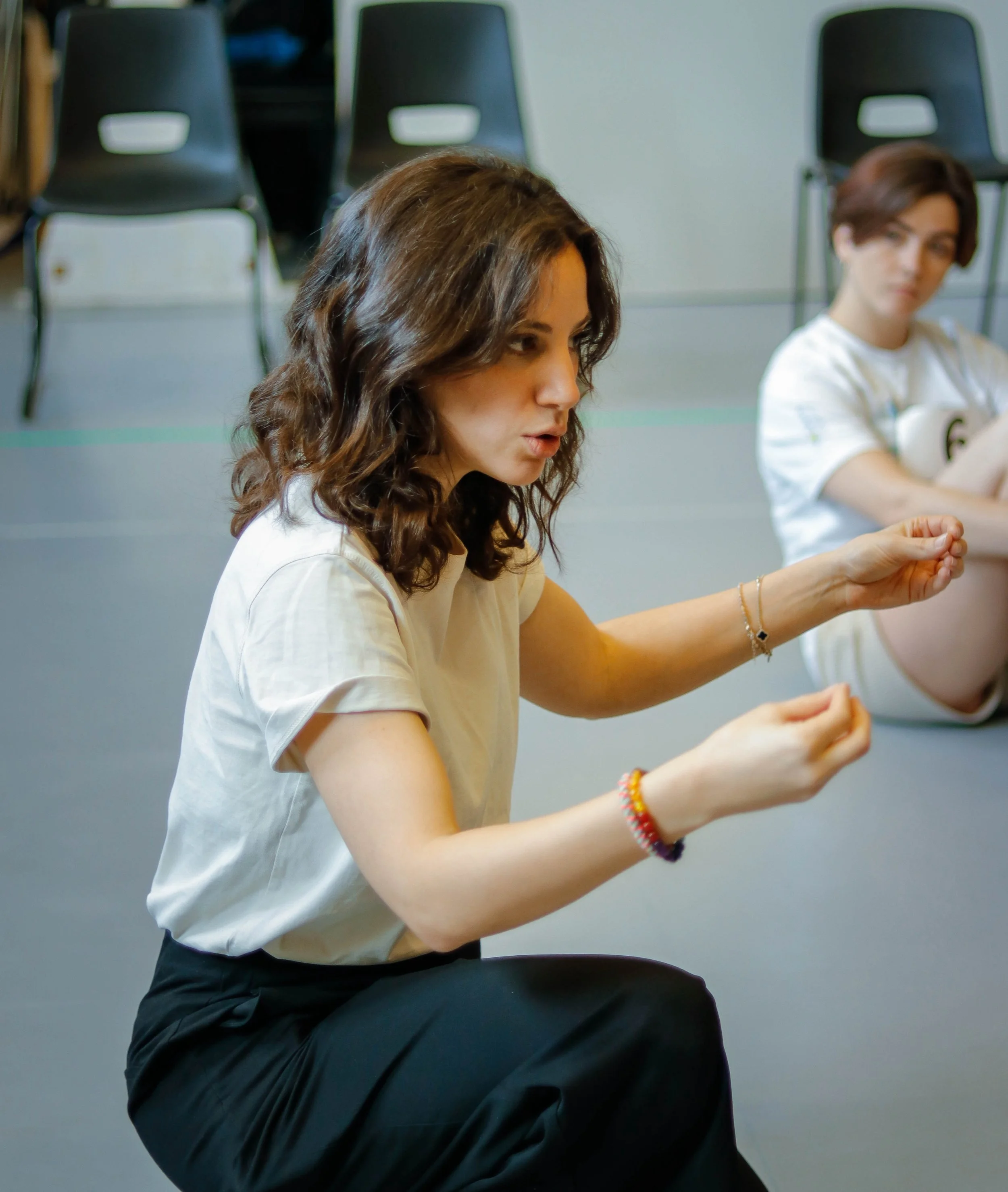
The interplay between Art and Science
This is, first and foremost, an arts and community project — with science and technology in service of the practice, not the other way round. We begin from what happens in the room and let the theatre questions drive what we measure.
What we look at — and why. Our starting point is how performers reach cathartic states. Drawing on both established theatre methods and folk traditions — communal storytelling, lament, ritual and chorus work — we experiment on how practice is linked to engagement and emotional/cognitive regulation patterns for performers and, in turn, audiences. We centre catharsis because it is where art meets wellness: reaching and releasing heightened states has been at the heart of the theatrical experience and a trauma-informed, clinical concern. Reading these patterns turns the rehearsal room into something that both informs and proves the impact of theatre, as it offers communities a cultural tool for processing trauma, with the same approach serving broader wellness.
Equipment — what each does.
Chest bands (ECG chest straps) — heart function (HR/HRV), breathing and core movement patterns; physical and emotional engagement of performers and audience.
Microphone — real-time and offline practice annotation (practitioners' notes/cues).
Audiovisual recording — reference footage.
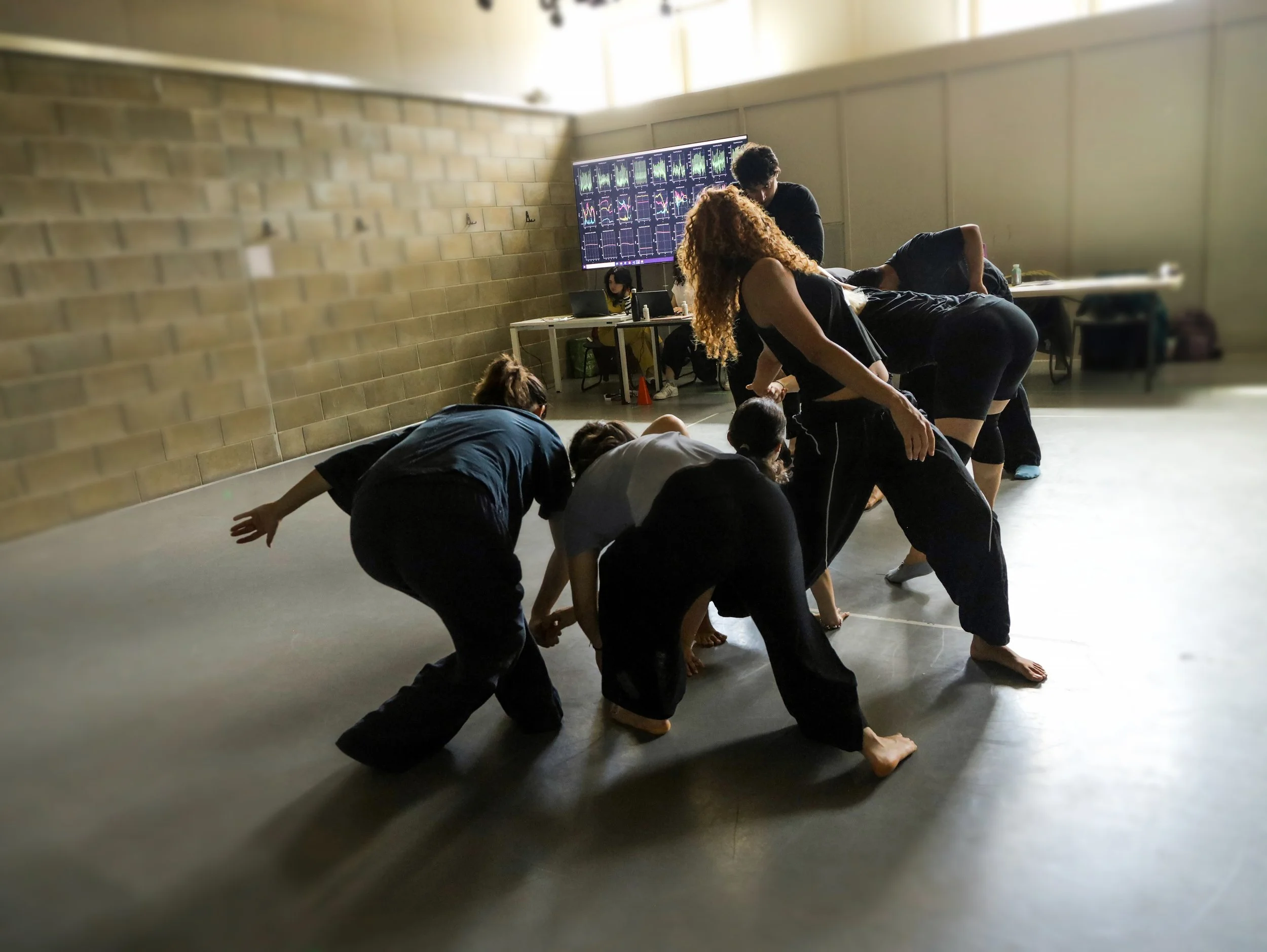
Motion capture (MOCAP) — detailed movement and the spatial distribution of performer synergies.
Next step — eye-tracking glasses — audience gaze, attention and cognitive/emotional regulation patterns.
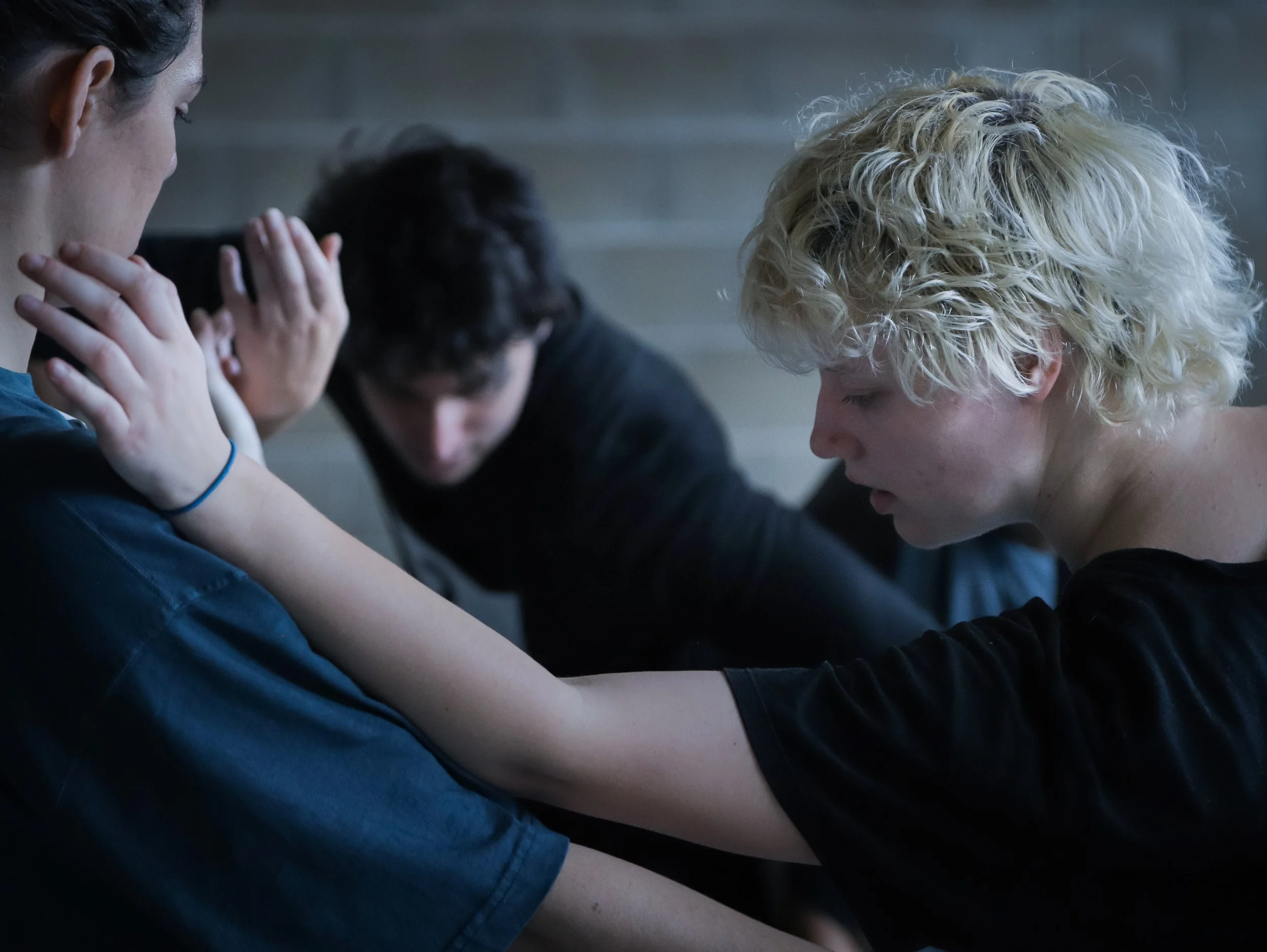
Vision
The project aims at building a creative, research and pedagogical reference for interdisciplinary work in theatre and communities. Its intended output is three-fold:
Creative prototype — a proof-of-concept for innovation-and-heritage theatre that operates as a community outreach project with stories transferable across different folk media and traditions. In other words, a platform that invites under-represented or endangered communities and traditions to share their voice, while interacting with professional artists, scientists and technologists.
Pedagogical toolkit — an evolving set of technical, empirical and ethics insights on digital arts and theatre-tech, to develop and share with arts and research institutions.
Theatre Biometrics platform — creative and scientific tools to monitor, investigate and empower the physical and emotional state of performers and audiences, with links to broader accessibility, rehabilitation and wellness.
At the core of this work's vision the artist remains the architect of an interdisciplinary creative process, not a passive tester of tools. Longer term, the project aims to foster interdisciplinarity in performing-arts practice, community outreach and pedagogy and to bridge the divide between classical and folk heritage and modern innovation. In this, Anastasia hopes to be an advocate of benevolent technology in the performing arts — campaigning for awareness of AI-ethics issues (human agency, data privacy) and the distinction between empowering versus replacing or desensitizing human creativity. It is her firm belief that the creative roadmaps derived from such work are directly applicable to many other fields now called to handle the potential, the challenges and the ethical concerns of smart/AI technologies.
Ethics Roadmapping
Ethics roadmapping lies at the foundation of our interdisciplinary approach and includes consciously selected and designed practice standards:
1) Human data is anonymised and securely handled, under UK data-protection rules, and never used to train AI models towards human/performer cloning (aligned with UK Equity standards and the principles of the No Fakes Act regarding the use of likeness, voice or performance for AI training or generative digital cloning).
2) The work informs human judgement and creativity rather than supplanting it.
3) Safeguards and wellbeing practice are built in from the start, with the relevant specialists involved as the project grows.
More specifically, we follow a structured approach to advancing responsible tech and AI use in a live art form:
Human accountability and transparency: In full alignment with its creative and societal core, the work aims at designing, testing, and ethically governing a neuro-inspired theatre-tech methodology that treats AI not as an authoritative decision-maker but as a subtle, human-centred infrastructure embedded within live performance. The project operationalizes transparency through interpretable biometric sensing, articulated data flows, and participant-facing explanations that frame AI outputs as reflective indicators rather than prescriptive judgments. Accountability and agency are ensured through human-in-the-loop governance, where artists, facilitators, and researchers retain responsibility for practice-level decisions at every stage of deployment.
Safety: Safety is embedded through trauma-informed design and continuous ethical review across rehearsal and performance contexts, particularly when working with culturally diverse communities. The system prioritizes data privacy, security, informed, revocable consent and participant ownership, ensuring that biometric and creative data are never reused beyond the scope of explicit consent, or detached from cultural context. Algorithmic and human bias detection and mitigation are addressed both technically and socially, through reflective interdisciplinary oversight of researchers and advisors.
Sustainable applicability: The project promotes economic security for arts professionals by proposing a scalable model for intelligent theatre spaces that strengthens rather than replaces human creativity and labor. By proving where theatrical methods yield clinical, wellness, and social benefits, the project creates new jobs in which performers and practitioners apply their craft directly within clinical, care, and community-cultural contexts. The model quantifies the impact of theatre and supports global sustainable applicability and growth across the education, theatre, and wellness sectors. From general audiences to special social focus groups, it expands access to cultural infrastructure—including, but not limited to, underserved communities, the neurodivergent and/or people with other disabilities. It thereby offers an ethics-in-practice roadmap for deploying AI in socially embedded creative environments and for advancing human well-being, mutual understanding, international leadership and knowledge exchange across artistic and scientific communities.
Previous Work
The project grows directly out of a hybrid professional identity — theatremaker and neuroscientist/AI researcher — with each strand feeding the other.
a. Theatre. Anastasia's theatre grounding combines classical training (LAMDA, Greek National Theatre, NTUA) with contemporary practice, interfacing a Greek heritage with the British tradition and an international stage. As a theatremaker she has championed cultural heritage, endangered folk traditions, underrepresented voices and responsible art-tech innovation. This project's performance context builds directly on her previous work "Weird Sisters" — a play navigating grief, war trauma, immigration and cross-cultural identity through classical themes, Ipiros folk lamenting traditions and Greek Chorus work.
b. Neuroscience & technology. Anastasia holds a PhD from Imperial College London in Systems and Computational Neuroscience. Her clinical and computational research — at Imperial and Hammersmith Hospital's Neurology Department — developed neurobehavioral biomarkers from wearable body-sensor networks, spanning action–perception, attention, embodied cognition, as well as monitorig and managing neurodegenerative diseases. That prior biomarker framework is the direct scientific basis for Theatre Biometrics. She has also lectured in Neurotechnology, Applied AI and Ethics (Imperial, Royal College of Art), sat on AI ethics committees in Europe and the US, and worked as an AI strategist.
c. Why now (art and science converging). The convergence over the past decade of neuroscience, frugal wearable sensing and computational/AI methods is a fundamentally new paradigm — turning raw physiological signals into actionable insight about human states. It has already reshaped medicine and sport, but remains under-researched in theatre. Specifically, recent studies and arts projects started examining biosignals in performance, yet none combine comprehensive multimodal biosignal analysis with sophisticated computation for diagnostic wellness insights alongside creative augmentation in theatre. That gap — plus the maturity of the instruments and Anastasia's prior biomarker work — is what makes the moment timely and unprecedented.
d. R&D so far — key dates and what happened.
31 May 2026: R&D I at LAMDA - 6 performers, 1 measured audience member, 2 theatre practitioners, 2 research scientists; chest-band sensing + audiovisual recordings; exploring cathartic states and audience–performance engagement patterns
6 June 2026: R&D II at LAMDA - 8 performers, 1 audience member, 2 theatre practitioners, 2 research scientists; chest-band sensing + audiovisual recordings; exploring cathartic states and audience–performance engagement patterns
16 July 2026: R&D III at LAMDA - Showcasing the project as an open day-long lab — "Bodies, Data, and Performance" — at the RADA & LAMDA AI Theatre Symposium, led by Anastasia as Creative Director (facilitated by Charles Douglas, Head of Virtual Production Studio at LAMDA). Framing question: how can signal capture, analysis and augmentation empower creative processes and support human wellbeing in theatre spaces and beyond? 6 performers, 1 measured audience member, 2 theatre practitioners, 2 research scientists, 1 technologist. Open to the Symposium public. Motion capture (MOCAP) incorporated, to advance movement information and insights on spatial distribution of performer synergies
The 16 July lab drew very positive feedback from representatives of drama schools, universities and the industry.
Institutional support & partnerships: We deliberately ground the project in institutions at the forefront of training and research — in theatre practice and in neuroscience & technology — before taking it out to communities and the industry.
Conservatoires & drama schools: LAMDA and BADA as standing creative partners and sponsors, with performers and practitioners also drawn — for all three R&D sessions — from RADA, RCSSD (Royal Central School of Speech and Drama) and Italia Conti.
Academic / scientific: Imperial College London (neuroscience partners) — Dr Dimitra Tsakona (Research Scientist in Biometrics & Human Machine Interfaces) and Professor Pedro Mediano (Head of Neural Computation Lab).
Independent creatives & technical professionals: e.g. Chris Sivertsen (Movement Director & Co-Creative Lead), Nathan Woodworth (Tribal & Chorus Storytelling), Charles Douglas (LAMDA VP Studio Head), Mazano Semwayo (Motion Capture Technician), Aishwarya Ajit Gaikwad & Carly Hendricks (On-the-Ground Producers, Cherry & Guava Theatre Company) and Callum Holt (Organisational Producer, The Middle Floor).